

Quick answer: AI robot vacuums 2026 are moving beyond basic mapping and suction. Shark, Dyson and Roborock now use cameras, LiDAR, 3D sensors and artificial intelligence to recognize stains, avoid obstacles and adjust how they clean.. These systems can reduce daily maintenance, but AI alone does not guarantee better pickup, mopping or reliability.
Robot vacuums are moving beyond basic mapping. The newest premium machines can detect messes, decide whether to vacuum or mop, repeat a cleaning pass and even check whether a stain is gone before moving on.
Shark is combining UV stain detection with an RGB camera. Dyson is using AI-powered visual recognition to classify spills and adjust its cleaning passes. Roborock is focusing heavily on smarter navigation, obstacle recognition, adaptive cleaning plans and, in one model, a mechanical arm that can move small objects.
This sounds impressive, but it also raises an important question: Do these AI robot vacuum features produce meaningfully cleaner floors, or are they mainly a reason to charge more?
This UchiGlow guide compares what Shark, Dyson and Roborock are actually doing, which features appear useful and what buyers should check before paying premium prices.
Editorial note: UchiGlow has not conducted laboratory testing on the products discussed below. Our analysis is based on current manufacturer documentation and publicly available product information. Performance claims attributed to a brand come from that manufacturer and may differ in real homes.
What Is an AI Robot Vacuum?
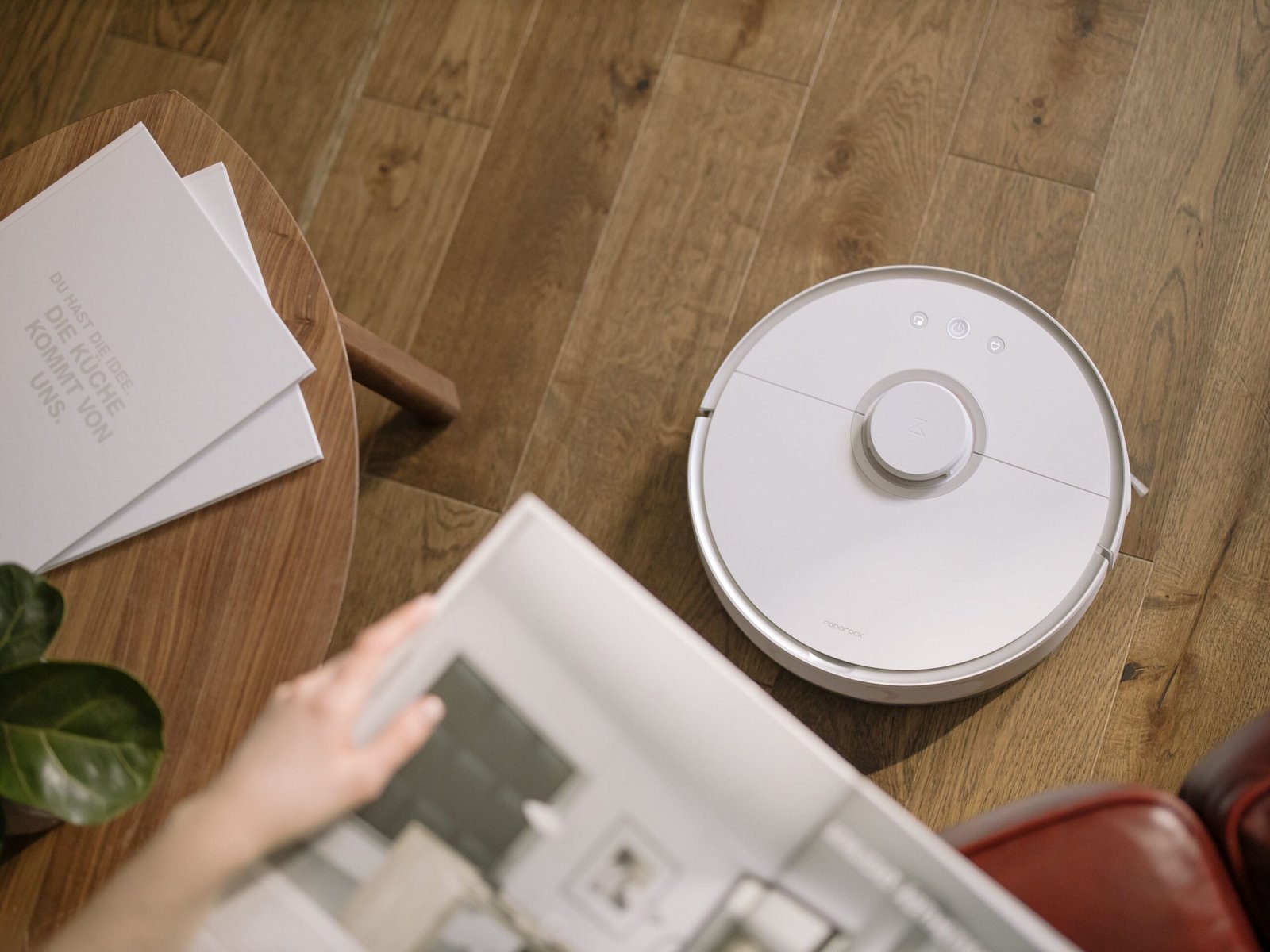
An AI robot vacuum uses sensors, cameras and software to recognize parts of its environment and adjust its behavior. Depending on the model, that may include identifying obstacles, classifying spills, detecting dirt, choosing a cleaning mode or deciding that an area needs another pass.
A traditional robot vacuum may use bump sensors or LiDAR to map rooms and follow a route. A newer smart robot vacuum can add object recognition and adaptive cleaning on top of that map.
| Technology | What it does | Why it may matter |
|---|---|---|
| LiDAR mapping | Measures distances and builds a map | Helps the robot navigate efficiently, including in low light |
| RGB or HD camera | Captures visual information | Can support object, stain and room recognition |
| 3D sensing | Estimates the shape and position of obstacles | May reduce collisions and improve obstacle avoidance |
| AI object recognition | Classifies items such as shoes, cables or socks | Can help the robot choose a safer route |
| Dirt or stain detection | Identifies areas that may need more attention | Allows targeted cleaning instead of treating every area equally |
| Adaptive cleaning | Changes suction, mopping or the number of passes | Can match the cleaning action to the detected mess |
Not every product marketed as a smart robot vacuum offers all of these functions. “AI” is also a broad label, so buyers should look for the exact behavior the feature enables rather than the word itself.
What Changed in AI Robot Vacuums in 2026?
The clearest shift is from navigation intelligence to cleaning intelligence.
Earlier generations primarily tried to answer: Where am I, and where should I go next? Newer flagship models are increasingly designed to answer: What am I looking at, what kind of cleaning does it need, and is the job finished?
The most important trends include:
- AI-powered stain and spill recognition
- Better robot vacuum obstacle avoidance
- LiDAR, cameras and 3D sensors working together
- Automatic changes to suction and mopping behavior
- Anti-tangle brush systems for long hair and pet hair
- Self-emptying and self-cleaning robot vacuum docks
- Hot-water mop washing and warm-air drying
- More effective edge and corner cleaning
The brands are not taking identical approaches. Shark and Dyson are putting strong emphasis on stain detection and verification, while Roborock is pushing further into navigation, object recognition and whole-home automation.
Shark PowerDetect UV Reveal Uses UV Light to Find Hidden Messes
Shark launched the PowerDetect UV Reveal 2-in-1 Robot Vacuum and Mop in March 2026. According to SharkNinja, it is the first robot vacuum and mop to combine UV light detection with an RGB color camera to seek out messes that may be difficult to see under normal light.
The system uses UV Stain Detect to reveal certain dried-on messes, including dried liquids, food splatter and pet accidents. When the robot finds a stain, HyperSonic Mopping applies a targeted scrubbing pattern. Shark says the robot then verifies that the mess has been removed before continuing.
Shark’s NeuroNav AI uses onboard sensors, cameras and algorithms to guide the robot, while NeverStuck technology is designed to help it move over obstacles. Its ThermaCharged NeverTouch Pro Base is bagless and can clean the mopping pad after use. Shark lists up to three hours of runtime and introduced the model at a starting price of $1,299.99.
How Is This Different From the Shark AI Ultra Robot Vacuum?
The popular Shark AI Ultra robot vacuum belongs to an earlier generation of Shark’s robot-vacuum lineup. Models such as the Shark AI Ultra AV2511AE focus on Matrix Clean navigation, LiDAR home mapping and a self-emptying base. Those remain useful features, especially for scheduled vacuuming and pet-hair maintenance, but they do not offer the same UV stain-detection system as the newer PowerDetect UV Reveal.
In simple terms:
- Shark AI Ultra: smart mapping, systematic vacuuming and self-emptying convenience
- Shark PowerDetect UV Reveal: vacuuming and mopping with AI navigation, UV stain detection and targeted scrubbing
If you are researching the older model, read our Shark AV2511AE review for a closer look at its pet-hair performance, LiDAR navigation and 60-day bagless self-empty base.
That distinction matters for searchers comparing a Shark AI robot vacuum. The newer model is more technologically ambitious, but an older Shark AI Ultra 2-in-1 robot vacuum may still make more financial sense if UV detection and advanced stain cleaning are not priorities.
Dyson Spot+Scrub Ai Decides How Many Times to Clean a Stain
The Dyson Spot+Scrub Ai wet and dry robot vacuum cleaner takes a different but related approach. Dyson says the robot uses green-spectrum LED illumination and an AI-powered HD camera to reveal and identify wet and dry messes. It then decides how many cleaning passes an area needs.
For a stubborn stain, Dyson says the Spot+Scrub Ai can make up to 15 passes and analyze the floor between passes to check whether the mess is gone. Its self-cleaning microfiber wet roller is washed continuously as it rotates, so fresh water—not a progressively dirtier mop pad—is applied to the floor.
The robot combines an HD camera with LiDAR, dual-line lasers and other sensors for mapping and obstacle avoidance. Dyson lists 18,000 Pa of maximum suction, automatic carpet boost and a dock that empties dry debris, refills water, washes and dries the roller, and recharges the robot.
This is a meaningful development in the robot vacuum and mop category. Instead of applying the same movement to an entire room, the machine attempts to identify a specific mess, choose a response and verify the result.
However, those are manufacturer-reported capabilities. Real-world results can still depend on the stain, flooring, room layout, maintenance and software behavior.
Shark vs Dyson: How Their AI Cleaning Systems Differ
Both premium robot vacuum cleaners are trying to make automated mopping more targeted, but their sensing and cleaning systems are not identical.
| Feature | Shark PowerDetect UV Reveal | Dyson Spot+Scrub Ai |
| Primary focus | Detecting hidden stains and verifying removal | Identifying stains and adjusting repeated cleaning passes |
| Visual system | UV light plus RGB camera | Green-spectrum illumination plus AI-powered HD camera |
| Navigation | NeuroNav AI with sensors and cameras | LiDAR, camera, dual-line lasers and additional sensors |
| Wet cleaning | Targeted HyperSonic scrubbing | Self-cleaning microfiber wet roller |
| Recleaning behavior | Verifies the mess before moving on | Up to 15 passes for some stubborn stains, according to Dyson |
| Dock | Bagless, pad cleaning and maintenance functions | Dry-debris emptying, water refill, roller washing and drying |
| Best fit on paper | Buyers interested in UV-assisted stain detection | Buyers prioritizing adaptive wet cleaning and a continuously washed roller |
Neither system should automatically be called the best robot vacuum and mop without comparative testing. Shark’s additional UV sensing layer is distinctive, while Dyson’s clean-water roller and repeated stain passes address a common weakness of basic drag-style mop pads.
The better choice depends on more than AI. Carpet pickup, edge cleaning, app reliability, replacement parts, noise, dock maintenance and total cost all matter.
Roborock Is Pushing AI Into Navigation and Whole-Home Automation
Roborock’s current strategy extends beyond stain recognition. The brand is combining 3D sensing, object identification, adaptive chassis systems and automated docks to help its robot vacuums operate with less preparation from the user.
The Roborock Saros 20 uses StarSight Autonomous System 2.0 for mapping and obstacle recognition. Roborock says it can identify more than 300 types of obstacles and uses SmartPlan 3.0 to analyze home layouts and user behavior when creating cleaning plans.
The Saros 20 also advertises 36,000 Pa suction, a dual anti-tangle system, extendable edge-cleaning components and an AdaptiLift Chassis 3.0 designed to cross taller thresholds. Its multifunction dock can auto-empty, refill water, dispense detergent, wash the mop with hot water, dry components and clean itself.
This illustrates a broader point about smart home cleaning: the intelligence is not limited to recognizing a sock. It can also influence route planning, floor transitions, cleaning order and maintenance.
Roborock Saros Z70 Adds a Mechanical Arm
The Roborock Saros Z70 shows how far the category is experimenting. Its OmniGrip system is a foldable five-axis mechanical arm designed to move certain small objects so the robot can clean areas that were previously blocked.
Roborock says the Saros Z70 has 108 pre-programmed objects and can let users define additional items through AI-powered customization. The arm uses its own camera, sensors and LED light, and its lifting function is limited to supported objects weighing under 300 grams. Importantly, the arm is disabled by default and must be activated by the user.
This does not mean a robot vacuum can tidy an entire room like a person. Supported objects, software rules and real-world conditions impose clear limits. Still, the Saros Z70 represents a change from simply avoiding clutter to attempting to interact with it.
Shark vs Dyson vs Roborock: Who Is Leading AI Robot Vacuums?
There is no single winner because the brands are solving different parts of the cleaning problem.
| Brand | Main AI direction | Most interesting benefit | Main question buyers should ask |
| Shark | UV-assisted stain detection and cleaning verification | Finds some messes that may be hard to see | Is the premium worth it for your mix of hard floors, stains and carpets? |
| Dyson | Visual stain identification and repeated wet cleaning | Adjusts the number of passes and cleans its roller continuously | Does its wet-cleaning system justify the price and maintenance? |
| Roborock | Navigation, object recognition and broader automation | Reduces pre-cleaning and handles complex layouts | Will you use the advanced dock, app and automation features regularly? |
UchiGlow’s take: Shark currently has the most unusual stain-detection story, Dyson has a compelling clean-water mopping design, and Roborock is pushing the widest vision of an autonomous home-cleaning robot. The most useful approach depends on the problem in your home—not on which product uses the word “AI” most often.
Does AI Actually Make a Robot Vacuum Better?
AI can make a robot vacuum more autonomous, especially when it improves obstacle avoidance, stain detection or cleaning decisions. AI alone does not guarantee better cleaning performance.
Useful AI features may help a robot:
- avoid cables, shoes and pet toys
- recognize a spill or dirty area
- select vacuuming, mopping or repeated passes
- adjust cleaning by room or floor type
- reduce the need to prepare the floor before every run
- create more personalized schedules and cleaning plans
But even advanced software cannot fully compensate for a weak brush, poor airflow, ineffective mopping, unreliable navigation or a badly designed dock. A smart robot that frequently gets stuck or leaves debris behind is still a poor cleaner.
Do Bigger Suction Numbers Mean Better Cleaning?
No. A higher advertised Pascal figure does not automatically make one robot vacuum cleaner better than another.
Figures such as 10,000 Pa, 18,000 Pa or 36,000 Pa are easy to compare, but they do not describe the entire cleaning system. Real pickup also depends on:
- airflow and suction delivery at the floor
- main-brush design and agitation
- floor contact and sealing
- navigation and cleaning coverage
- the number and direction of passes
- carpet behavior
- edge-cleaning design
- hair handling and brush tangles
This is why a buyer should not select a smart robot vacuum from a suction number alone. Independent, standardized tests are more useful when available, especially for carpet debris, pet hair, obstacle avoidance and mopping.
Are AI Robot Vacuums Better for Pet Hair?
AI may make a robot vacuum more convenient in a home with pets, but it does not automatically improve pet-hair pickup.
Object recognition can help the robot avoid pet bowls, toys and some pet-related obstacles. Smarter navigation can improve coverage, and a self-emptying robot vacuum can reduce how often the onboard bin needs attention. Some premium systems also attempt to identify pet messes.
Actual hair pickup still depends heavily on brush design, airflow, floor contact and cleaning passes. For long hair and shedding pets, look for:
- a proven anti-tangle brush system
- strong pickup on both carpet and hard floors
- easy brush and wheel maintenance
- a dock large enough for frequent shedding
- reliable obstacle avoidance
The best robot vacuum for pet hair is therefore not necessarily the model with the most AI features. It is the one that combines good pickup and low-tangle maintenance with dependable daily navigation.
Are Self-Emptying Robot Vacuums Worth It?
A self-emptying robot vacuum can be worth the extra cost if you run it frequently, have pets or want less contact with collected dust. The dock transfers debris from the robot’s small bin into a larger bag or bagless container.
Newer premium docks go further by washing mop pads or rollers, drying them, refilling clean water, collecting dirty water and dispensing detergent. These functions make a robot vacuum and mop more autonomous, but they do not eliminate maintenance.
Owners still need to:
- empty or replace the dock’s debris container
- refill clean water and discard dirty water
- clean filters, brushes, sensors and trays
- remove trapped hair when necessary
- monitor odors and residue
The dock is worth paying for when those automated tasks match your routine. If you live in a small space or vacuum only occasionally, a simpler dock may offer better value.
Are Robot Vacuums Worth It in 2026?
Robot vacuums are worth considering for frequent floor maintenance, especially in homes with pets, hard floors or recurring crumbs and dust. They are most useful when treated as an automated maintenance tool—not a total replacement for deep cleaning.
Consider upgrading if:
- your current robot frequently gets lost or stuck
- cables, shoes or pet toys interrupt most cleaning runs
- you want automated vacuuming and mopping
- hair tangles require constant brush cleaning
- you would benefit from a self-emptying or self-cleaning dock
- your older robot misses edges, rooms or floor transitions
Keep your current robot if:
- it maps your home reliably
- pickup is already good on your floors
- you do not need mopping or stain recognition
- you are comfortable emptying and cleaning it manually
- the new features would not change your daily routine
For many homes, reliable LiDAR navigation, good brushes and a basic self-emptying base may deliver more value than the most expensive AI system.
What to Check Before Buying a Smart Robot Vacuum
Before choosing a Shark robot vacuum, Dyson robot vacuum or Roborock robot vacuum, compare the complete ownership experience:
- Floor compatibility: Check performance expectations for hard floors, low-pile carpet, high-pile carpet and rugs.
- Obstacle avoidance: Look beyond the phrase “AI” and verify which objects the robot is designed to recognize.
- Mopping design: A vibrating pad, spinning mop and self-cleaning roller work differently.
- Dock requirements: Measure its footprint and check water-tank, dust-bin or bag maintenance.
- Hair handling: Review the main brush, side brush and anti-tangle claims.
- App controls: Confirm support for room selection, no-go zones, schedules, multi-floor maps and privacy settings.
- Consumables: Price replacement filters, bags, brushes, pads and cleaning solution.
- Support and warranty: Check availability in your country before importing a premium machine.
- Independent evidence: Prefer reproducible testing over suction numbers and brand demonstrations alone.
The Bottom Line
Robot vacuums are getting smarter in 2026, but the most important progress is not the AI label itself. It is the move toward robots that can sense a specific problem and take a more appropriate action.
Shark’s PowerDetect UV Reveal uses UV light and a camera to search for hidden stains. Dyson’s Spot+Scrub Ai identifies messes and can repeat wet-cleaning passes while washing its roller continuously. Roborock is combining object recognition, advanced mapping, adaptive cleaning and highly automated docks—and the Saros Z70 is even experimenting with moving small obstacles.
These features can make automated floor care more useful. They can also add cost, complexity and maintenance. Before paying for the newest AI robot vacuum, decide which problem you actually want it to solve: pet hair, stains, clutter, carpets, mopping or simply the time spent emptying a bin.
The best smart robot vacuum is not the one with the longest feature list. It is the one whose automation works reliably in your home and removes tasks you genuinely dislike doing.
Frequently Asked Questions
Everything you need to know about AI robot vacuums, navigation, pet safety and maintenance.
What is an AI robot vacuum?
An AI robot vacuum uses cameras, sensors and software to recognize obstacles or messes and adjust its navigation or cleaning behavior. Features vary by model, so “AI” may mean object avoidance, stain identification, adaptive cleaning or a combination of these.
Are Robot Vacuums Worth It?
Robot vacuums are worth it for people who want frequent, automated removal of dust, crumbs and pet hair. They are especially useful in busy homes and for maintaining hard floors between deeper cleans. They are less worthwhile if your rooms contain many obstacles, your floors require frequent deep scrubbing or you expect the robot to completely replace a full-size vacuum
Are AI robot vacuums better than regular robot vacuums?
They can be better at avoiding objects, detecting dirty areas and automating cleaning decisions. However, an AI model is not automatically better at debris or pet-hair pickup. Brush design, airflow, floor contact and navigation remain essential.
Do robot vacuums use LiDAR?
Many midrange and premium robot vacuums use LiDAR to map rooms and navigate. Some newer models combine LiDAR with cameras, structured light or 3D Time-of-Flight sensing for more detailed obstacle recognition.
Can robot vacuums recognize pet waste?
Some robot vacuums are designed to detect and avoid certain pet-related messes, but no system should be assumed to work perfectly in every condition. Check the manufacturer’s supported-object list and keep high-risk areas clear when possible.
Is Shark or Roborock better?
Neither brand is universally better. Shark offers accessible self-emptying models and is now emphasizing UV-assisted stain detection in its premium line. Roborock offers a broad range of advanced mapping, obstacle-avoidance, mopping and dock technologies. Compare the specific models rather than choosing by brand alone.
What is the best robot vacuum and mop?
The best robot vacuum and mop depends on floor type, stains, carpets, pets, dock space and budget. Prioritize proven vacuum pickup, an effective wet-cleaning design, reliable navigation and manageable maintenance instead of choosing from suction or AI claims alone.
Are self-cleaning robot vacuums maintenance-free?
No. Automated docks can empty debris, wash mops, refill water and dry components, but owners must still clean filters, brushes, sensors and dock trays and manage clean water, dirty water and consumables.
What Is the Best Robot Vacuum?
For most buyers, our top recommendation is the Shark AI Ultra AV2511AE. It combines 360° LiDAR home mapping, Matrix Clean navigation, strong everyday pickup and a bagless self-emptying base that can hold up to 60 days of dirt and debris. Its self-cleaning brushroll also makes it a particularly practical choice for homes with pets and long hair.
Read our complete Shark AI Ultra AV2511AE review and check the current price →